Topics
English for QA Engineers: Bug Triage, Stakeholder Pushback & Release Sign-Off
Practice spoken English for QA engineers: leading bug triage meetings, defending bug severity against developer pushback, and communicating release go/no-go sign-offs.
What you’ll practice
In modern agile software teams, Quality Assurance is not just about writing test automation scripts; it is a cross-functional communication discipline. QA engineers must lead daily bug triage meetings, align with Product Managers on acceptance criteria, and defend quality standards when developers attempt to downgrade defects before release cutoffs.
For non-native English speakers, articulating nuance during high-tension sprint deadlines can be intimidating. If you lack the exact phrasing, you may inadvertently sound overly aggressive or, conversely, concede too easily on critical quality risks.
This guide provides practical spoken scripts, assertive negotiation phrases, and vocabulary to help QA professionals communicate with authority.
Defending Defect Severity: The Data-First Approach
When a developer remarks, “That’s an edge case, nobody will ever click that button twice,” emotional arguments rarely work. Use the Impact-Reproduction-Workaround structure:
Spoken Responses to Common Pushback
When a developer claims “It’s not reproducible”:
“I understand it passed on your local environment, Leo. However, in our staging cluster, we observed this race condition across three consecutive test runs under simulated 3G latency. I have attached the HAR logs and memory heap dumps to ticket QA-412. Let’s step through the reproduction steps together after standup.”
When a product manager asks to “Ship now and fix in a patch”:
“While I recognize the pressure to hit Friday’s marketing deadline, shipping with defect QA-418 means new signups cannot complete billing details on mobile browsers. There is currently no customer workaround. My recommendation is to withhold release sign-off until the hotfix is verified on our staging build.”
When negotiating priority downgrades (P1 to P2):
“We can agree to downgrade the priority only if we implement a fail-safe fallback message in the UI so users are not left with a frozen white screen. Without that fallback, this remains a release blocker.”
Essential Vocabulary for QA Standups & Triage
| Term | Contextual Meaning | Spoken Example |
|---|---|---|
| Flaky test | Test that intermittently passes and fails | “We quarantined two flaky end-to-end Cypress tests to prevent pipeline build noise.” |
| Release blocker | Critical bug that prevents deployment | “This null pointer exception in the token refresh logic is an absolute release blocker.” |
| Edge case vs. Happy path | Rare condition vs. standard user flow | “While that is an edge case, the happy path checkout flow is also showing regression.” |
| Workaround | Temporary alternative for users | “There is no viable client-side workaround, which is why we cannot defer this ticket.” |
| Regression | Previously working feature that broke | “The recent API gateway refactor caused a regression in user profile image uploads.” |
The Go / No-Go Release Sign-Off Meeting
Delivering the final verdict during release sign-off meetings requires clear, decisive statements:
Recommended Spoken Formulas
- Clear Go: “All 48 acceptance criteria have been validated on RC-3. Automated regression suites passed at 99.4%, and zero P1 or P2 bugs remain open. From QA, we provide full release sign-off.”
- Conditional Go: “QA provides conditional sign-off, pending the verification of hotfix PR #892 in the staging canary environment by 3:00 PM.”
- Definitive No-Go: “Due to unresolved database timeout errors during load testing, QA cannot sign off on tonight’s deployment. We recommend postponing the release to tomorrow morning’s window.”
Practice Assertive QA Communication with Eli
Practicing assertive communication in a safe environment is the fastest way to eliminate hesitation.
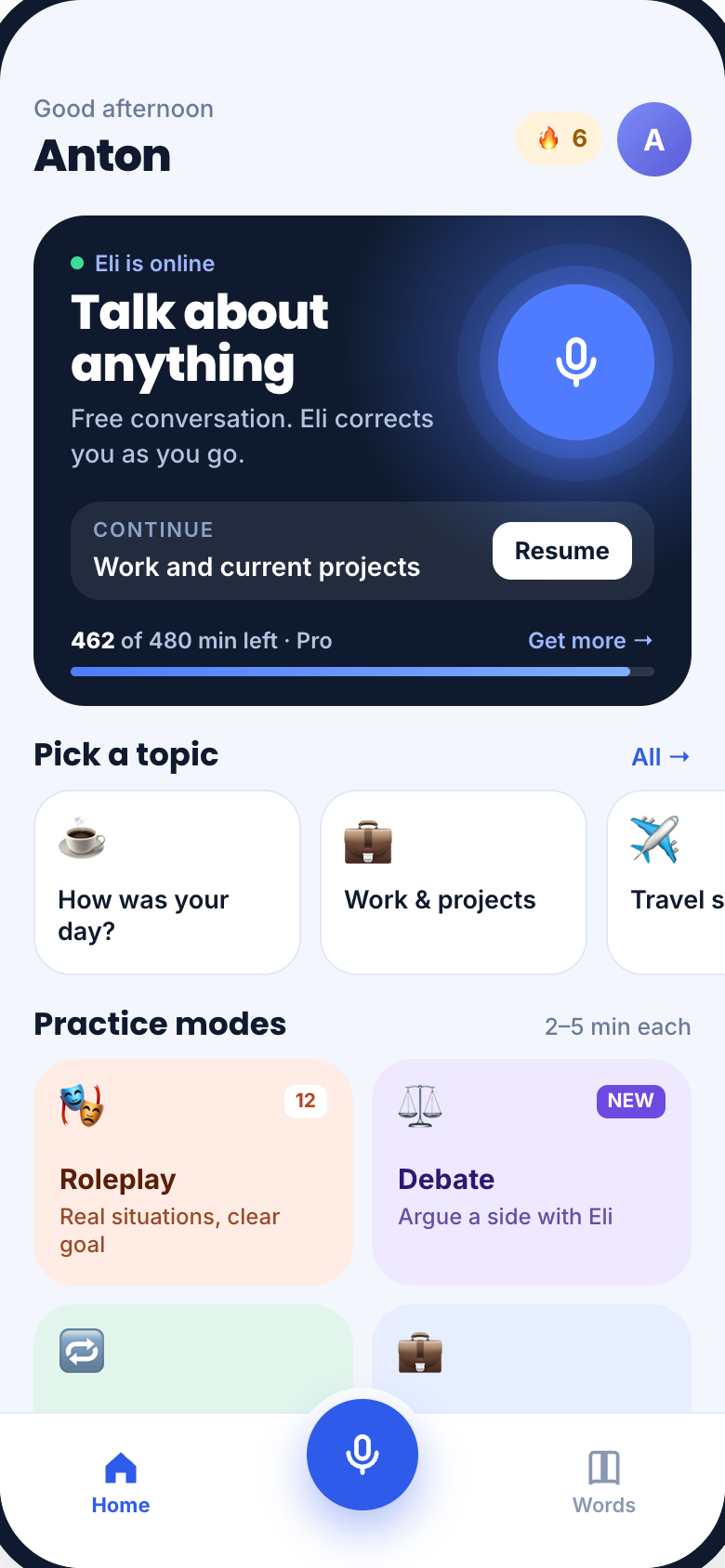
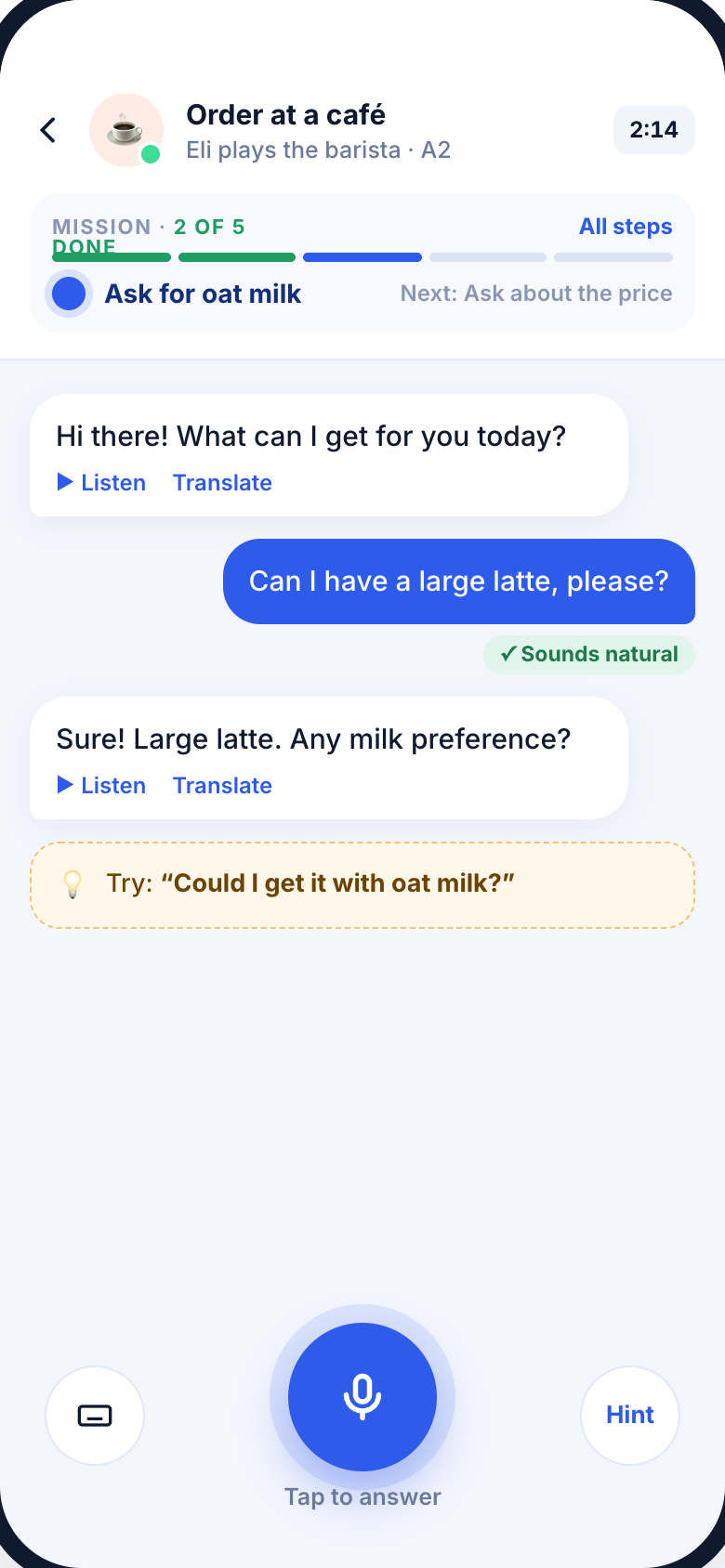
On Elispeak, you can practice the QA Triage Roleplay:
- Scenario: The AI simulates a stressed Engineering Lead who insists on shipping a release despite an open critical defect.
- Goal: Stand your ground, present telemetry evidence calmly, and negotiate an acceptable compromise or delay.
- Feedback: Get actionable coaching on tone, assertive vocabulary, and pronunciation.
Start practicing your professional English today on the Elispeak app or test your spoken baseline with our free interview trainer.
Frequently Asked Questions
Why is spoken English challenging for QA professionals in international teams?
QA engineers frequently deliver unwelcome news: reporting critical blockers, delaying release dates, or pushing back against developers who want to downgrade bug severity. Doing this assertively yet diplomatically in non-native English requires precise vocabulary and tactful negotiation phrasing.
How should a QA engineer handle developer pushback on bug severity in English?
Focus on user impact and verifiable reproduction data rather than subjective opinions. Use objective phrasing such as: ‘From an end-user perspective, this breaks the checkout flow for 100% of Safari users with no workaround. That is why it meets our criteria for a release blocker.’
How does Elispeak help QA engineers improve their spoken English?
Elispeak simulates realistic cross-functional discussions where the AI plays the role of a rushed developer or product owner trying to bypass a defect, giving you realistic speaking reps to practice assertive, evidence-based rebuttals.
Related topics
Practice
Practice this topic with Eli
Get instant feedback on your answers, pronunciation, and vocabulary.